
Gratz Equipment
The studio is equipped with a range of traditional Gratz apparatus, each designed to develop strength, balance, mobility and ease of movement. From the Universal Reformer and Wunda Chair to the Spine Corrector and Pedi Pole, every piece of equipment offers a different way to strengthen, mobilise and rebalance the body.
Whether you are new to Pilates, returning from injury, or looking to deepen your practice, sessions are tailored to your individual needs and experience.
Discover the equipment used in the studio below, or arrange an initial consultation.
Why I use Gratz equipment
Gratz has been manufacturing Pilates equipment in New York since 1929 and remains faithful to Joseph Pilates' original designs. Built from high-quality materials and crafted to exact specifications, the equipment supports the precision, clarity and effectiveness of the Classical Pilates method.
Having trained and worked with a variety of apparatus over the years, I have come to value the integrity of the original designs. Subtle differences in dimensions and construction can alter the exercises and the way the body responds to movement.
For this reason, I choose to work exclusively with Gratz equipment, allowing clients to experience the method as it was originally intended: with strength, control and ease of movement.


The Ladder Barrel
The Ladder Barrel combines a large, curved padded barrel with a ladder on an adjustable framework, allowing the body to be supported and challenged through a wide range of movements without the assistance or resistance of springs, instead working with and against gravity.
The shape of the barrel provides valuable tactile feedback and support as you explore spinal extension, flexion, side bending and rotation, while the ladder provides different hand and foot positions from which to work. Changing your position in relation to the barrel can alter the leverage considerably, allowing an exercise to be adapted or progressively challenged as strength, mobility and control develop.
I particularly value the Ladder Barrel for exploring spinal mobility, length through the body and movement around the hips and pelvis. It can provide support where movement feels restricted, while also demanding considerable strength and control when the body moves away from that support.
It is also home to some of the most recognisable exercises within the Classical repertoire, including the Ballet Stretches, Swan, Short Box series and Horseback, and can be a valuable place to explore some of the Mat exercises in a different environment. Although some of these movements may look like stretches, they require much more than flexibility — strength, balance and control come together to create a fully integrated, whole-body experience.
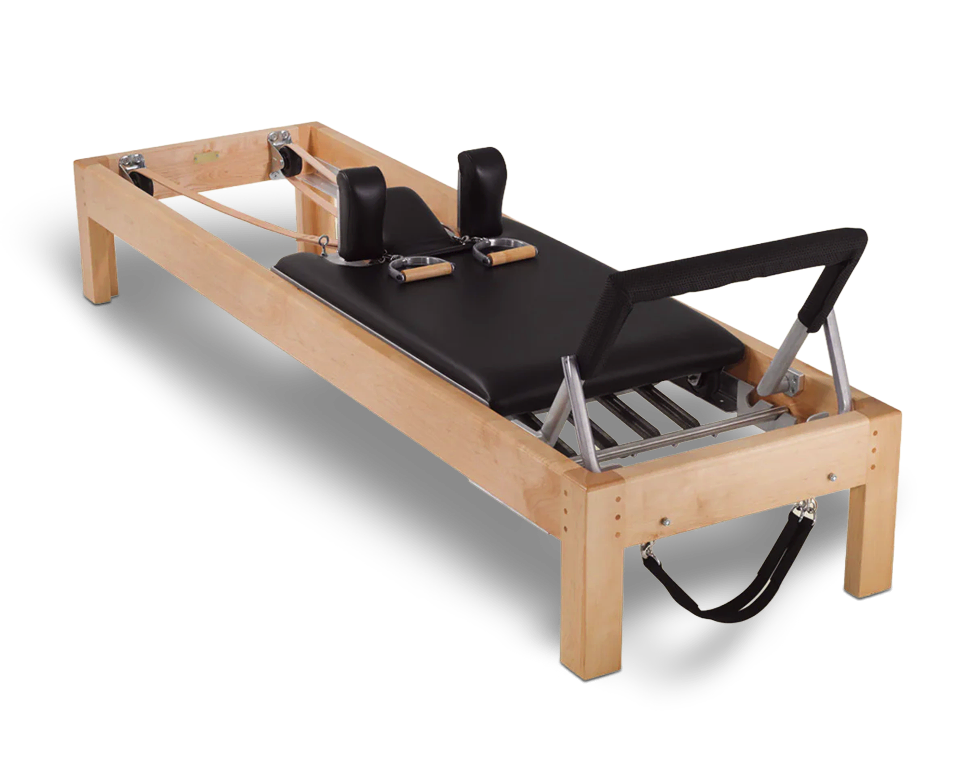
The Universal Reformer
Joseph Pilates developed and patented his Universal Reformer in the 1920s. Its ingenious design combines a moving carriage with springs, straps, pulleys and a footbar, creating an apparatus that can both support and challenge the body through movement.
Exercises are performed lying, sitting, kneeling and standing, allowing the whole body to be worked in many different relationships to the springs and moving carriage. The resistance provides valuable feedback, helping to develop strength, mobility, control, coordination and balance, while encouraging movement from the body's centre, traditionally referred to in Classical Pilates as the ‘Powerhouse’.
What makes the Reformer so versatile is that the springs can provide assistance as well as resistance. An exercise can be adapted through spring tension, range of movement or body position, allowing me to find an appropriate level of support or challenge for the person in front of me.
Although it is perhaps the most recognisable piece of Pilates apparatus, the Reformer was never intended to stand alone. Within the Classical studio it works alongside the Mat, Chairs, Barrels, Wall Unit and smaller apparatus as part of an integrated whole-body system.
Within Classical Pilates, the Reformer is taught as a progressive system rather than a collection of unrelated exercises. We begin with the Basic repertoire, establishing the foundations of the work before progressing through Intermediate and, when appropriate, selected Advanced exercises. As strength, control and understanding develop, familiar exercises become increasingly challenging and sophisticated.
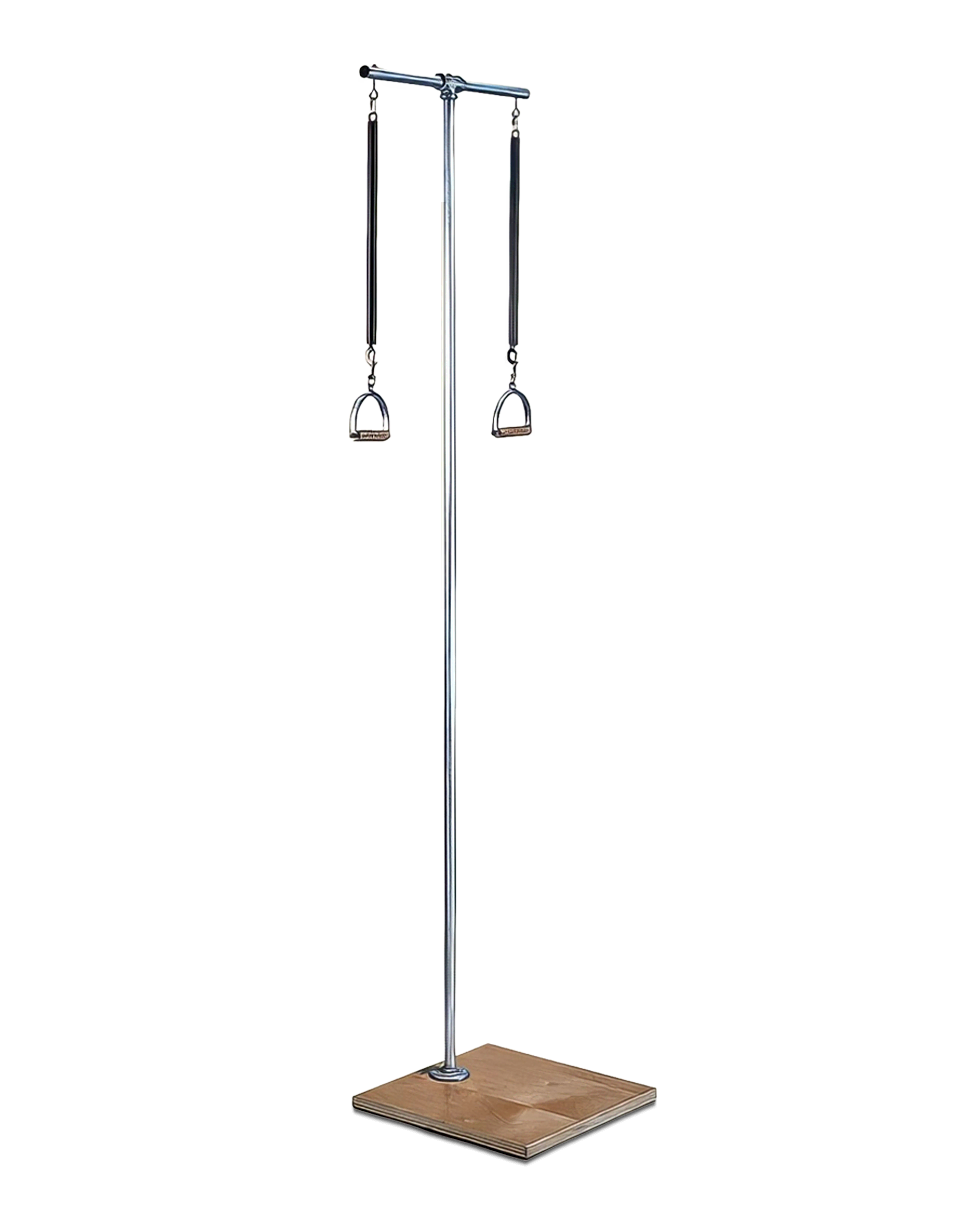
The Pedi Pole ‘Ped-O-Pul’
Originally developed as a way of challenging breath, posture and control in standing, the Pedi Pole — reportedly designed for an opera singer to expand her lung capacity & often referred to by Joseph Pilates as “The Idealiser” — offers far more than its simple appearance might suggest.
Standing on its small base with your spine against the pole provides immediate feedback about posture, spinal alignment and balance. With very little external support, you become much more aware of where your body is in space and how you respond to the movement of the springs.
The Pedi Pole is particularly valuable for developing proprioception, balance, coordination and postural awareness, as well as exploring the relationship between the shoulders, upper back and neck. I also use it to challenge the legs & hips while maintaining a strong connection to the body's centre.
What makes the Pedi Pole particularly interesting is that the work takes place upright and against gravity. The pole brings greater awareness to the back of the body, while the springs provide resistance and feedback in a very different environment from the Reformer or Mat.
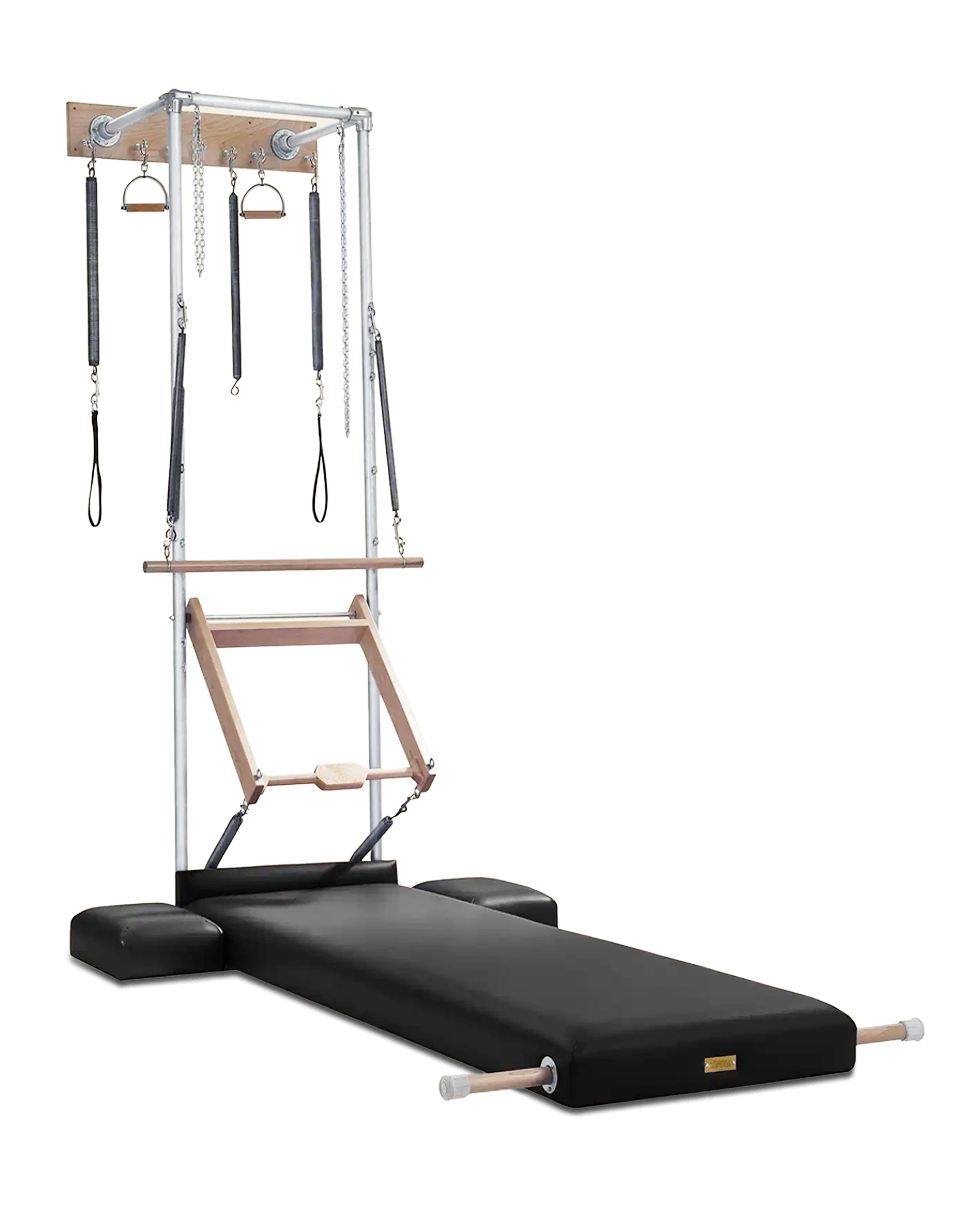
The Wall Unit with High Mat/Tower with the Reformer
Adapted from Joseph Pilates’ Cadillac, the Wall Unit incorporates the Push Through Bar, Roll Down Bar, leg springs and arm springs and can be used with the High Mat or in a Tower/Reformer configuration.
Its versatility gives me numerous ways to adapt the work to whomever I am working with — providing support where it is needed and challenge where it is appropriate.
Its versatility gives me the freedom to introduce and adapt exercises to the individual, developing strength, mobility, control and coordination while providing varying degrees of spring assistance and resistance. The raised, padded surface offers comfort and support, making the work accessible to beginners while providing considerable scope for progression as strength and confidence develop.
I greatly value the Wall Unit when movement needs to be adapted around an injury, surgery or physical limitation. Once someone is ready and appropriately cleared to exercise, the springs and supported positions give me many different ways to work with what their body can do. For example, if one leg is immobilised in a cast, it may still be possible to work appropriately with the upper body, centre and unaffected leg while keeping the person comfortably supported.
It is also an excellent way to develop spinal mobility and articulation, and to explore movements or exercises that may not yet be accessible on the Mat, enabling you to fully experience an exercise and develop the strength, control and understanding it requires at your own pace.

The Spine Corrector
The Spine Corrector, also known as the Step Barrel, differs from much of the other Classical apparatus because it allows the body to explore movement in all directions without spring resistance, although small hand weights can be introduced to add challenge.
Regular practice can help release tension in the hips and chest, improve alignment and develop abdominal strength, while encouraging lenPart of the family of Barrels within Classical Pilates, its distinctive curved shape provides support and valuable tactile feedback as the spine moves through flexion, extension, side bending and rotation. It can also be used to challenge balance, control and strength through the centre of the body.gth and strength at the same time. It is also an excellent preparation for the Classical mat exercises.
I use the East Coast Barrel because its shape, proportions and padding provide the support and feedback I want when teaching this work. By changing your position in relation to the curves of the barrel, familiar movements can be experienced in an entirely different way — sometimes supported by the apparatus and at other times made considerably more challenging.
The shape of the Spine Corrector allows you to experience how your spine and torso move against a supportive surface, bringing greater awareness to areas that may move freely and those that may feel more restricted. It is especially useful for exploring spinal articulation and mobility, while encouraging length and space through the torso rather than simply forcing greater range.

The Arm Chair
The Arm Chair develops upper-body strength, scapular stability, coordination and balance while encouraging movement from the body's centre and greater awareness of posture. It is particularly valuable for developing awareness of the relationship between the shoulders, neck and upper back, and can be adapted for people experiencing neck and shoulder problems or scoliosis. The shoulder joint is exceptionally mobile, and relies heavily on the surrounding muscles for dynamic stability. Developing an appropriate balance of strength, mobility and control through this area can help create more coordinated, fluid movement through the shoulders and neck.
Using some of the lightest springs in the studio, the Arm Chair provides gentle assistance and resistance, making the work accessible while still allowing considerable progression. By changing the body's position and relationship to the springs, the exercises can become increasingly challenging as strength, control and coordination develop.

The Wunda Chair
The Wunda Chair is one of the most compact and versatile pieces of Classical Pilates apparatus. Its simple design combines a padded seat with a spring-loaded pedal, creating an extraordinary variety of exercises performed sitting, standing, kneeling or lying in different relationships to the Chair.
Unlike the Reformer, where the body is often supported by the moving carriage, the Wunda Chair frequently asks you to support and control your own body weight while working with the resistance of the springs and gravity. This makes it an excellent tool for developing strength, balance, coordination and control through the whole body.
I particularly value the Wunda Chair for standing work and balance, and for helping you connect the strength of the legs and hips with the body's centre and upper body. Its small base of support also provides immediate feedback about how you organise and control your body in space.
The springs can be adjusted to provide different levels of assistance or resistance, allowing an exercise to be adapted to the individual and progressively developed. Depending on the exercise, the Chair can offer valuable support while you learn a movement — or create a considerable challenge as your strength, confidence and control increase.

Magic Circle
The Magic Circle is one of the simplest and most portable pieces of Classical Pilates apparatus. It can be used on its own, incorporated into the Matwork or used alongside the larger apparatus, with exercises performed lying, seated or standing.
Despite its simplicity, the Magic Circle can completely change the experience of a familiar exercise. Used well, it doesn't simply make an exercise harder — it can help you understand where the movement is coming from and how your whole body is working together.
Its gentle resistance provides immediate tactile feedback, helping you become more aware of how different parts of your body connect and work together. Rather than simply squeezing against the Circle, the aim is to maintain control of both the pressure into and the release away from it, encouraging precision and connection throughout the movement.
The Magic Circle can be used between the legs, ankles, hands or arms to challenge the inner and outer thighs, hips, upper body and centre, while developing strength, coordination and body awareness. Its feedback can also help you recognise unnecessary tension and find a more balanced whole-body connection.

The Toe Exerciser
The Toe Exerciser is one of the smallest pieces of Classical Pilates apparatus, using gentle spring resistance to develop strength, mobility, control and awareness through the toes and feet.
Although the movement appears very localised, using the Toe Exerciser effectively requires much more than simply moving the toes. Maintaining the position of the legs while working against the spring brings the hip abductors and the Powerhouse into the exercise, creating a connection from the feet through the legs, hips and centre of the body.
This makes it another wonderful example of the whole-body nature of Classical Pilates. What appears to be an exercise for one very small part of the body can reveal how that part connects with, and is supported by, the rest of you.
The Toe Exerciser can be valuable for developing toe strength, dexterity and control, and for bringing greater awareness to how the toes and feet contribute to balance and movement. Rather than simply exercising the toes in isolation, it encourages you to experience the connection from your feet all the way into your centre.

The Foot Corrector
The Foot Corrector is a small, spring-loaded piece of Classical Pilates apparatus designed to develop strength, mobility, control and awareness through the feet and ankles, including the intrinsic muscles that help support the foot and its arches.
By placing different areas of the foot onto the curved support and working with the resistance of the spring, it provides immediate tactile feedback and allows you to explore how you distribute weight through your feet. The work develops greater awareness and control through the toes, arches, heels and ankles while challenging balance and stability.
I value the Foot Corrector because our relationship with the ground begins at our feet. How we use them influences the way we stand and move, and can affect how forces are transferred through the ankles and knees to the hips, pelvis and the rest of the body.
Perhaps surprisingly for such a small piece of apparatus, working effectively with the Foot Corrector also demands a strong connection to the body's centre, or Powerhouse. Rather than isolating the feet, the work encourages you to experience how the feet connect into the legs, hips and centre, and how the whole body participates in creating stability and control.
Despite its size, the Foot Corrector can be remarkably challenging. It encourages you to become more aware of how your feet meet the ground and how they connect with the rest of your body to support balance, stability and movement.